
For benches and backrests we choose light wood, free of resin and knots, that does not burn your skin at 90°C: abachi, aspen, thermo-aspen or alder. For the walls and ceiling, knot-free Scandinavian spruce, aspen or alder, and for the exterior, Siberian larch, thermally modified wood or spruce with a pigmented oil. Each of these species gives the sauna a different colour and character, so before you decide we show you samples and photos of finished projects. Durability also depends on what lies behind the panelling: an insulated wall with aluminium foil.
What wood for the benches?
A bench should feel cool to the touch, smooth and free of resin. These are the qualities of light species that conduct heat poorly:
| Species | Character in the sauna |
|---|---|
| Abachi | the coolest to the touch, light-coloured, soft |
| Aspen | light-coloured, no scent or resin, a little harder than abachi |
| Thermo-aspen | dark brown, stable, elegant, shows signs of use less |
| Alder | a warm, reddish tone that deepens beautifully over time |
The workmanship matters just as much as the species: boards with gaps between them, screws hidden underneath and a smoothly sanded surface. We do not use knotty wood or hardwoods for benches, because they get too hot.
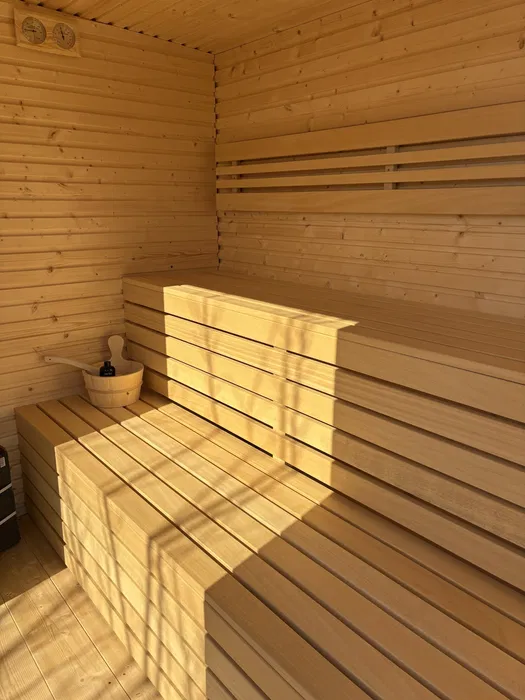
What wood for the walls and ceiling?
For the interior panelling we most often use knot-free Scandinavian spruce, and for saunas with a lighter or darker character, aspen, thermo-aspen or alder. The walls do not touch your skin, so here the look and stability of the wood are what count most. Over the years the panelling near the heater darkens slightly, which is natural and adds character to the sauna.
What wood for the exterior?
Outside, durable species work best: Siberian larch and thermally modified wood. Spruce is a good choice too, as long as it gets a pigmented oil renewed every 1-3 years.
| Exterior | Character | Care |
|---|---|---|
| Siberian larch | hard, durable, weathers to an attractive grey over time | oil only to keep the colour |
| Thermally modified wood | warm brown, very stable, does not rot | pigmented oil for colour every 2-3 years |
| Scandinavian spruce with oil | light or stained in any colour | pigmented oil every 1-3 years |
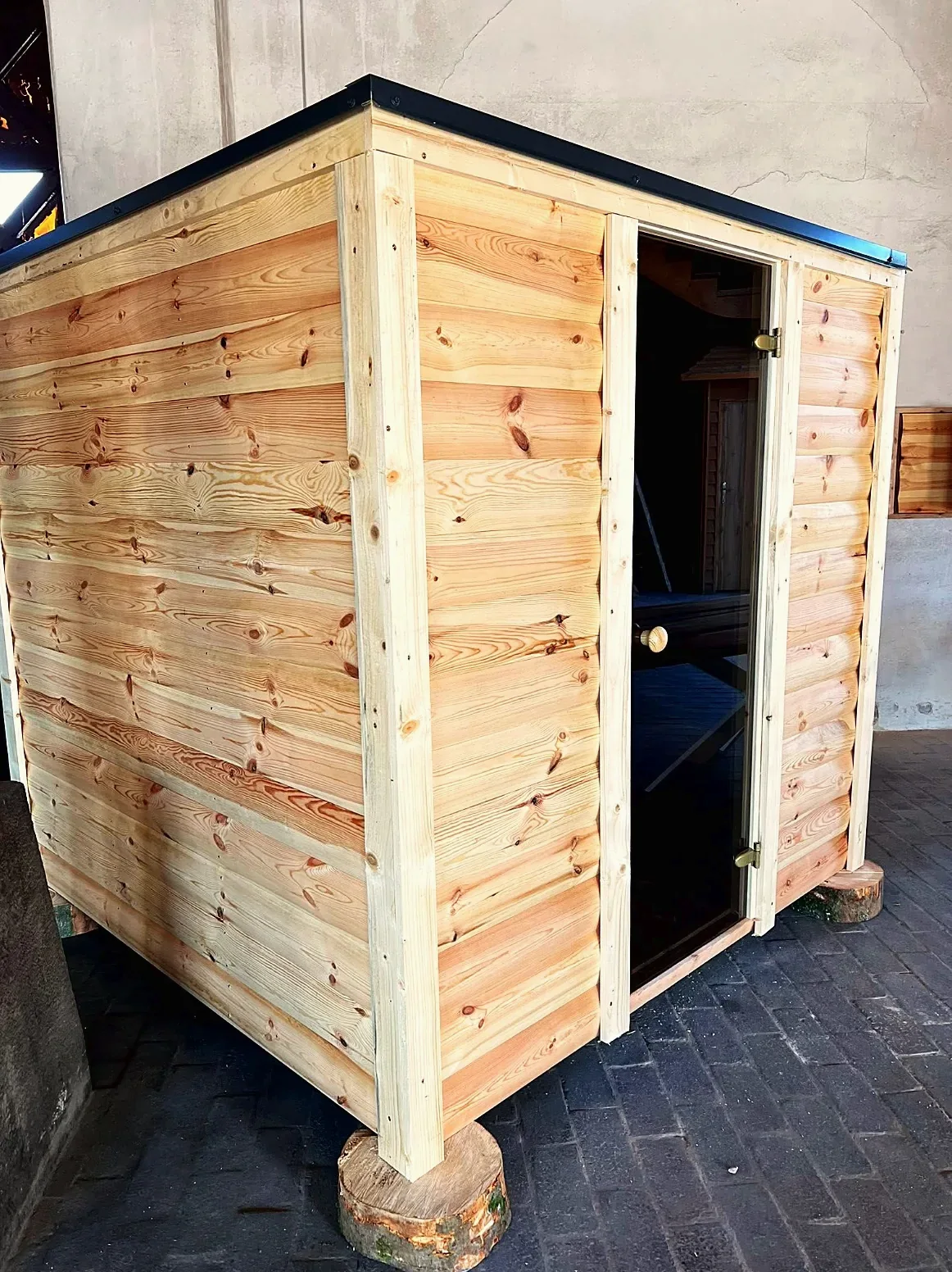
All wood without pigment turns grey over time; an oil with pigment and a UV filter keeps the colour you chose.
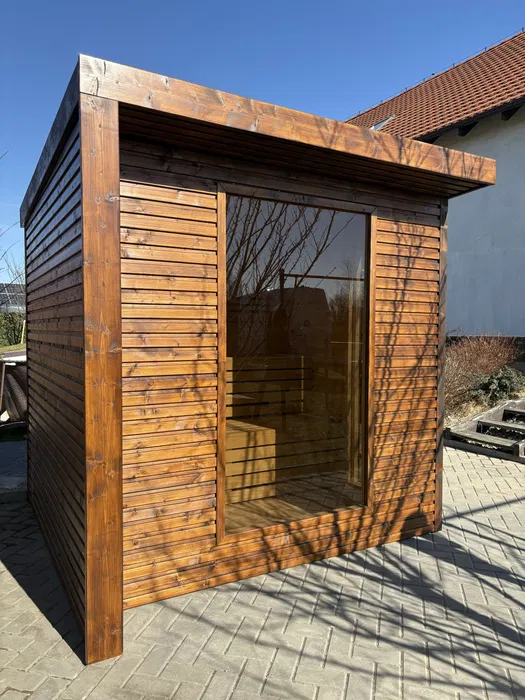
Is thermally modified wood worth choosing?
Thermally modified wood is pine, spruce or aspen heated to a high temperature without oxygen. As a result it loses its resin, absorbs less moisture, moves less and lasts longer outdoors. It costs more than spruce, but it gives you an elegant, dark colour and stability. We recommend it for exterior cladding in very sunny spots, and for benches and backrests in a dark tone.
What is behind the panelling?
From the outside in: exterior cladding, a breather membrane, a frame filled with mineral wool, an aluminium foil vapour barrier and the panelling. The aluminium foil stops the steam and reflects heat back into the cabin. At the design stage we go through every layer of the wall with you.
How do you look after the wood in a sauna?
- Benches: paraffin sauna oil before first use, then every 1-3 years. Benches are never varnished.
- Walls and ceiling: they need no coating; cleaning with a mild product is enough.
- After every session: leave the heater running for a few more minutes with the door ajar and the exhaust vent open, so the wood dries.
- Exterior: pigmented oil every 1-3 years, depending on the species and how much sun it gets.
At handover we show you how to look after the sauna so that it keeps looking the way it did on installation day.
- Benches: abachi, aspen, thermo-aspen or alder, free of resin and knots.
- Walls: knot-free Scandinavian spruce, aspen or alder.
- Exterior: larch, thermally modified wood or spruce with a pigmented oil.
- Behind the panelling: mineral wool and aluminium foil.
- We choose the species together with you, based on samples and photos of finished projects.
Let’s choose wood that will suit your garden.